
Sunshine on the Balance Sheet: How Solar Pumping Can Cut the Cost of Moving Water
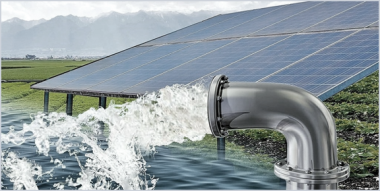
The first in a series on putting the sun to work on New Zealand’s pumps
On many farms and water schemes, the pump is the single biggest user of electricity on site, and it works hardest in the middle of a hot, dry summer. Here is the part that makes solar pumping almost too neat. That is exactly when the sun is at its strongest. The water is needed when the sun is shining.
That simple alignment is the heart of a growing opportunity for New Zealand. As power prices climb and solar hardware keeps getting cheaper, more operators are asking whether the sun could take over a large share of one of their biggest running costs. For anyone moving serious volumes of water, the answer is increasingly yes.
This is the first in a series on solar pumping for the New Zealand market. Over the coming articles we will work through the technology, the economics, and the practicalities of putting the sun to work on your pumps. We will start with the why.
New Zealand is having a solar moment
Distributed solar capacity climbed around 44 percent in 2025, a record 258 MW added in a single year according to the Electricity Authority, and installed capacity has been roughly doubling every two years since records began. Rooftops get most of the headlines, but the same economics pushing panels onto houses and sheds apply just as powerfully to one of the biggest energy users on any farm or water scheme, which is the pump.
The timing is no accident either. Power prices have risen about 21 percent over the past three years, with a steep 12 percent jump in 2025 alone, and Consumer NZ is warning of further increases as line charges continue their scheduled climb through to 2030. For irrigators, rural water suppliers, councils and processors, pumping is often the single largest line on the power bill. That is exactly the cost solar pumping is built to attack.
Why pumping is a natural fit for solar
Irrigation demand in New Zealand runs from roughly September to April, concentrated in the November to March period, which happens to fall in the months of longest days and strongest solar radiation. Unlike a household that wants power on a dark winter evening, a pump wants energy at midday in summer, precisely when a solar array is at full song.
The load and the resource line up almost perfectly. A well-sized system can carry a large share of the pumping duty directly from the panels, with very little energy going to waste. That natural alignment is why solar pumping has taken off overseas well ahead of the general solar curve, and why it is such a compelling option for New Zealand operations.
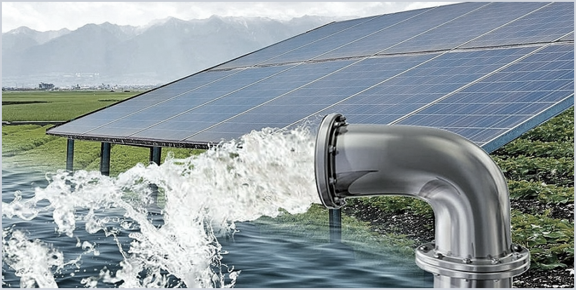
Solar-powered pumping in action, panels driving water directly to the field. (Power Electronics)
Grid, generator, battery or fully off-grid, the choice is yours
One of the most common misconceptions is that solar pumping forces an all-or-nothing decision, either stay tethered to the grid, or cut the cord and gamble on the weather. It does not. The Power Electronics SD750SP is built to run in whatever configuration suits your site, and to change as your needs do.
The drive accepts power from the solar array as DC, from the grid or a generator as AC, or from any combination of the three, and it always draws every available watt from the sun first. In a grid-connected hybrid setup it sits neatly alongside an existing mains-connected pump, topping up from the grid only when the sun cannot fully cover the load. On a bright day the grid can stay connected but effectively idle, drawing little or no current, because the panels are doing the work. The pump holds its pressure or speed setpoint the whole time, so any changeover is seamless and invisible to the process.
Where there is no mains connection, or where extending the grid is prohibitively expensive, the SD750SP will run fully off-grid, driving the pump directly from the array alone. Add a generator and it becomes a solar-diesel hybrid that cuts fuel use sharply while keeping the ability to pump on demand. Add battery storage and the system can carry pumping through cloud cover, into the evening, or across the shoulders of the day when the array alone would fall short.
That is the real advantage. Rather than locking you into one design, the SD750SP lets you build the system your site actually needs, whether that is a simple grid-tied retrofit on an existing pump, a standalone off-grid array, a generator-backed hybrid, or a battery-supported setup, and reconfigure it later as costs and demands change. Solar becomes a genuinely flexible renewable energy project rather than a single bet.
The technology, in brief
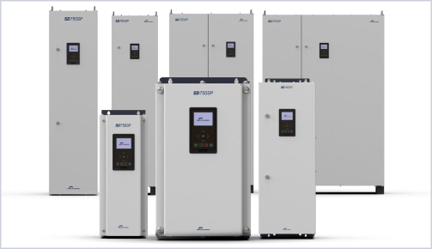
The SD750SP solar pumping range. (Power Electronics)
The SD750SP is a variable speed drive built specifically for solar pumping. A few features are worth knowing at a high level.
First, it combines MPPT and pressure control in a single unit. The same drive that runs the motor also tracks the array’s maximum power point and holds your pressure or flow setpoint, with no separate solar inverter or external controller required. Motor control and photovoltaic control share the same microcontroller, giving reaction times under 200 microseconds when a cloud passes.
Second, it has serious capacity. The range covers solar field voltages up to 1000 VDC and power up to around 1 MW, so it scales from a modest bore pump right up to large scheme pumps.
Third, it is built for the field. It is rated to operate at 50 degrees Celsius without power derating, with electronics varnished to a military and aerospace standard and support for long cable runs. These are the practical details that matter in dusty, hot and remote pumping sites.
The result is a single, purpose-built unit that manages the panels, the motor and whatever else powers the site, whether that is grid, generator or battery, together, extracting maximum performance from the array without adding complexity on site.
Proven where it counts
This is not experimental technology. Power Electronics has more than 30 MW of solar pumping installed across five continents, and two Spanish irrigation projects show the two ends of the opportunity.
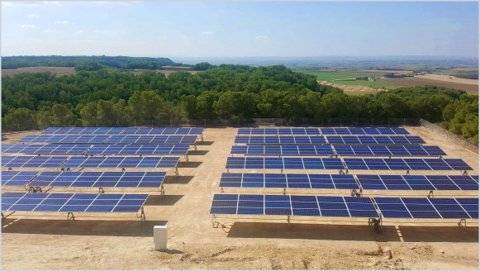
Bassa Nova, Lleida, solar array feeding the irrigation scheme. (Power Electronics)
At the Bassa Nova Irrigation Community in Lleida, the story is one of retrofit. The scheme originally ran its pumps on a diesel generator, with all the fuel cost that implies. Rather than rip it out, the operators added a hybrid solar system across three drives, keeping the generator purely as backup. The pumps now run on solar power for around eight hours a day in the shoulder season, stretching toward twelve hours through the long summer days, with the generator only stepping in during low light or peak demand. Diesel use, and cost, dropped sharply, without sacrificing the ability to pump on demand.
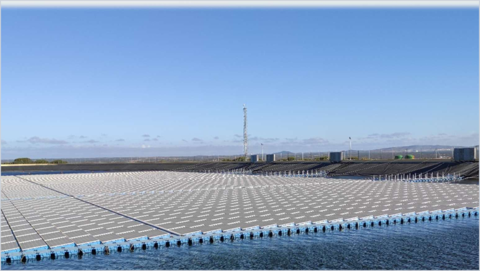
Sur-Andévalo, Huelva, the floating solar field on the supply pond. (Power Electronics)
At the Sur-Andévalo Irrigation Community in Huelva, the story is one of scale. Here a 1.6 MW solar field powers two of the community’s four 500 kW pumps, displacing grid energy that previously carried the full load. In a nice twist, the array is floating, mounted on the surface of the supply pond itself, which saves land and cuts evaporation during the hottest months. The drives coordinate in a master and slave arrangement and feed a SCADA system that lets operators watch available solar power, irradiance, flows and temperatures remotely.
Different scales, different starting points, but the same outcome: a large share of the pumping bill handed over to the sun.
What it means for New Zealand
Put the pieces together and the case for New Zealand is straightforward. Solar hardware has never been cheaper, power and network charges keep climbing, government is actively clearing red tape for solar installs, and, crucially, our biggest pumping demand falls in the sunniest months. For operations spending heavily on pumping, solar is not a green nice-to-have. It is an increasingly hard-nosed way to take a large, rising cost and cap it.
Conclusion
Solar pumping works because two things happen to line up. The water is needed when the sun is shining, and the technology now exists to capture that alignment on your terms, whether grid-connected, fully off-grid, generator-backed or battery-supported. With a flexible drive like the SD750SP, solar becomes a straightforward addition to an existing pump, or the foundation of an entirely new renewable energy system, rather than a leap of faith.
For many New Zealand operations, the pump is one of the largest and fastest-rising costs on site. Solar pumping offers a practical way to take a big bite out of that cost, using a resource that arrives, free, at exactly the right time of day and year.
Power Electronics NZ can help you work through whether solar pumping stacks up for your site, from a simple hybrid retrofit on an existing pump, through off-grid and battery-backed builds, to a full scheme design.
Next in the series
In the next article we will get into the numbers. How to size an array against a pumping load, what a realistic payback looks like under New Zealand conditions, and how the hybrid changeover works day to day.
Contact Us
If you are moving serious volumes of water and want to know whether solar pumping could cut your power bill, Power Electronics New Zealand can assess your site and model the numbers for your specific pump.
Get in contact with Power Electronics