
How the Little Yellow Digger Got Its Power Back
A familiar story, now playing out on a mine site
Do you remember the little yellow digger?
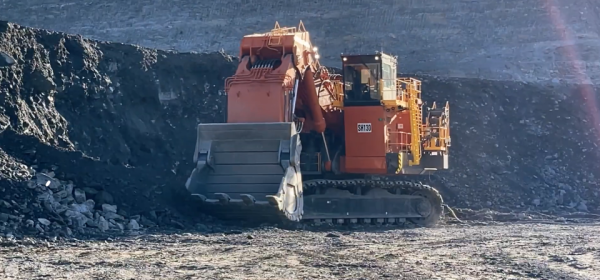
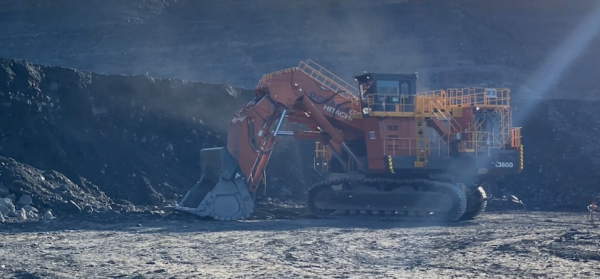
For many New Zealanders, it is a story about persistence. A small machine takes on a big job and quietly proves it can be done. It is simple, memorable, and has stuck with people for years. Recently, OceanaGold introduced their own version of the little yellow digger at their Macraes mine in North Otago. This one is not from a book, it’s not little (and it’s largely orange). It is a Hitachi EX3600E-6LD, a 360 tonne fully electric hydraulic shovel and the largest electric vehicle in the country. Powered by a 1,200 kilowatt electric motor, it swings a 22 cubic metre bucket and stands tall enough that the operator sits around 7 metres off the ground. It was brought onto site as part of OceanaGold’s move toward lower-emissions mining and more sustainable operations, and as the first machine of its kind in New Zealand, represents a meaningful shift in an industry that has traditionally relied on diesel-powered equipment.
Because Macraes mine site is so remote, maintaining a steady power supply can be a challenge, and a steady power supply is what the electric shovel needed to ensure reliable operation. To assist with this, Power Electronics New Zealand stepped in with a targeted solution, applying PE STATCOM technology directly to the machine’s power supply to stabilise and restore performance.
Like the story many people remember, this little yellow digger had a challenge to overcome before it could get the job done properly.
When electrification meets real-world conditions
Electrifying heavy mining equipment sounds straightforward in principle, but the reality is far more complex. The shovel is supplied by 11,000V and is expected to work around the clock, moving between 2,500 and 3,000 tonnes of material an hour and close to 1 million tonnes a month. Machines like this operate with massively varying loads, in demanding environments, and depend entirely on the quality and stability of the electrical supply feeding them. Unlike diesel equipment, which generates its own power, electric machinery is only as reliable as the electricity it receives.
In this case, the shovel began experiencing power quality issues when starting and during operation. The huge 1,200kW electric motor is started with a reactor starter and requires high amounts of reactive power at the moment it starts. Sourcing this reactive power from the network resulted in reduced voltage levels that affected both the shovel itself and also other areas of the site. As the load changed quickly through each dig and swing cycle, the supply struggled to stay stable, which showed up as voltage fluctuations and dips under heavy, rapidly changing load. These issues affected how consistently the shovel could operate and created uncertainty in a working environment where reliability is critical.
Understanding the real problem
When power issues arise on site, the first instinct is often to look upstream. This can involve strengthening infrastructure, upgrading supply capacity, or making changes to the wider electrical network. While these approaches can be effective in some cases, they are often costly, complex, and not always necessary for problems that are highly localised.
In this situation, the issue was not simply how much power was available. It was about how much power was required at the exact point where it was being used at that exact moment. The shovel was affected by voltage dips that might be manageable elsewhere in the network but became problematic under the specific operating conditions of the equipment. Recognising this shifted the focus away from large-scale changes and toward a more targeted solution.
A different approach using STATCOM
Power Electronics New Zealand approached the challenge by applying STATCOM technology directly to the shovel rather than attempting to stabilise the entire network. A STATCOM, or Static Synchronous Compensator, can operate in a number of different modes depending on the exact solution being sought. For this application it was decided that operating the STATCOM in power factor correction was the most suitable operating mode as it specifically addressed the power factor of the motor without having broader implications on the wider network voltage that a mode such as voltage control might do. The Power Electronics STATCOM is extremely rapid and can inject reactive power almost instantly at the moment the shovel starts or during operational load step changes.
By installing the STATCOM close to the shovel, the solution addressed the problem exactly where it occurred. Instead of relying on upstream improvements, the shovel was given a controlled and stable electrical environment of its own. This means that even as operating conditions change, the equipment continues to receive the stable voltage it needs to function properly.
This approach is significant because it demonstrates a more flexible way to apply power quality solutions. Rather than treating the network as a single system that must be stabilised in its entirety, it shows how targeted interventions can deliver effective results with less disruption and complexity. However, owing to flexible operational modes, should the requirement for wider network support be required at a later date, it will be possible to reconfigure the STATCOM to permit this.
The result on site
Once the STATCOM was installed, the improvement in performance was clear. The instability issues were resolved, and the shovel was able to operate consistently under real working conditions. Disruptions when the shovel started were eliminated, reaction times of the shovel increased owning to solid voltage supply, interruptions were reduced, and productivity increased.
Measured outcomes such as improved uptime, fewer interruptions, and steadier voltage at the machine are best confirmed with site data, but the most important result was practical. The little yellow digger could now do its job without the limitations that had previously held it back. In a mining environment, that kind of reliability is essential, and it is often the difference between a concept that works in theory and one that delivers real value on site.
What this means for the future of mining
This project highlights an important lesson for the industry. Electrification is not just about replacing diesel engines with electric alternatives. It requires a supporting approach to power quality that ensures equipment can operate reliably in demanding environments.
Technologies like Power Electronics STATCOM offer a way to solve these challenges without relying on major infrastructure upgrades. By focusing on the point of use, operators can improve performance, reduce risk, and make electrification more practical across a wider range of applications. This is particularly important as mining companies look for ways to reduce emissions while maintaining productivity and operational certainty. For OceanaGold, the shovel is a first step toward fully electric loading equipment, and it points to an opportunity for the wider New Zealand sector to follow.
Conclusion
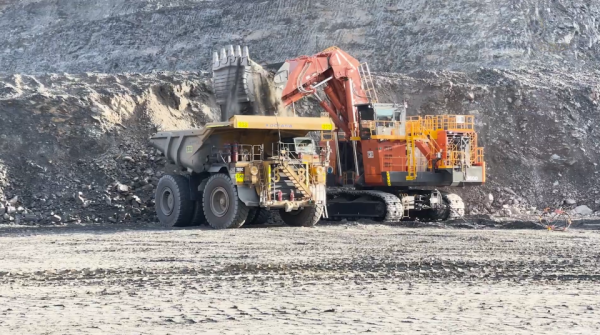
The little yellow digger at OceanaGold is a small part of a much larger story. Because it draws power from NZ’s electricity grid, which is largely from renewable energy sources, with the South Island generation being 100% renewable, the shovel is effectively carbon neutral from a loading point of view, and it is expected to cut around 3,600 tonnes of carbon a year, about the same as taking 1,800 cars off the road. That makes it a real step toward OceanaGold’s goals of a 30% reduction in emissions intensity by 2030 and net carbon zero by 2050. It also shows that progress depends on solving very specific technical challenges in practical ways.
By applying STATCOM technology directly to the shovel, Power Electronics New Zealand helped turn a promising idea into a working solution. It is a reminder that meaningful change does not always come from large-scale transformation. Sometimes it comes from understanding a problem clearly and solving it in the right place.
In this case, it meant helping one “little yellow” digger does exactly what it was designed to do
If your operation is exploring electrification or experiencing power stability challenges, Power Electronics New Zealand can help assess your site and identify targeted solutions. Get in contact with us.